


FAQs – Eczema Cream for Kids
Is this cream suitable for newborns?
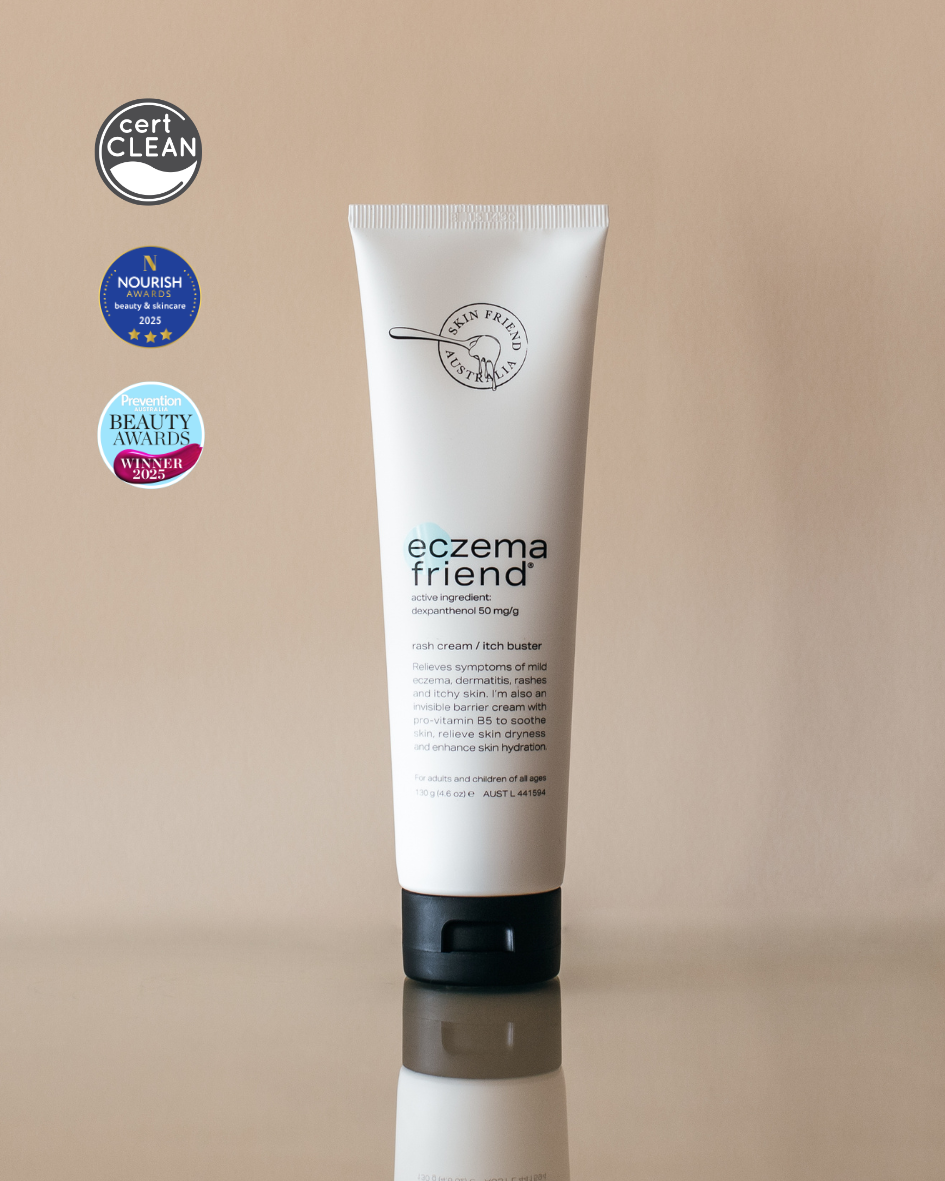
Yes. Our non-toxic baby eczema cream is ideal for newborns and gentle enough for their delicate skin, because Eczema Friend does not contain fragrance, dyes, parabens, essential oils like tea tree oil, PFAS (synthetic chemicals that may be toxic to babies) or olive oil. Why is this important? More than 80% of skincare products, including many baby eczema creams, contain olive oil, which can damage a baby’s skin barrier according to research. So when purchasing a baby eczema cream, ensure it’s olive oil-free. Our eczema creams leave out these ingredients, giving you a safe topical regime for your child.
Can I use this nappy (daiper) rash cream for eczema on my toddler’s face?
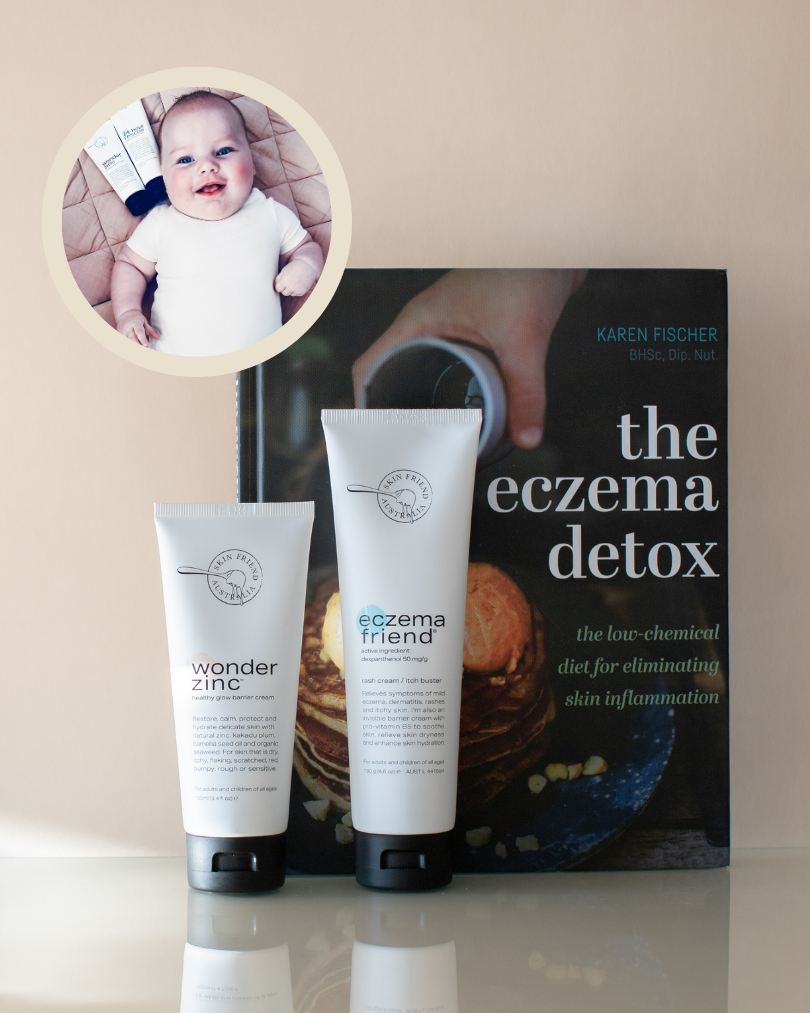
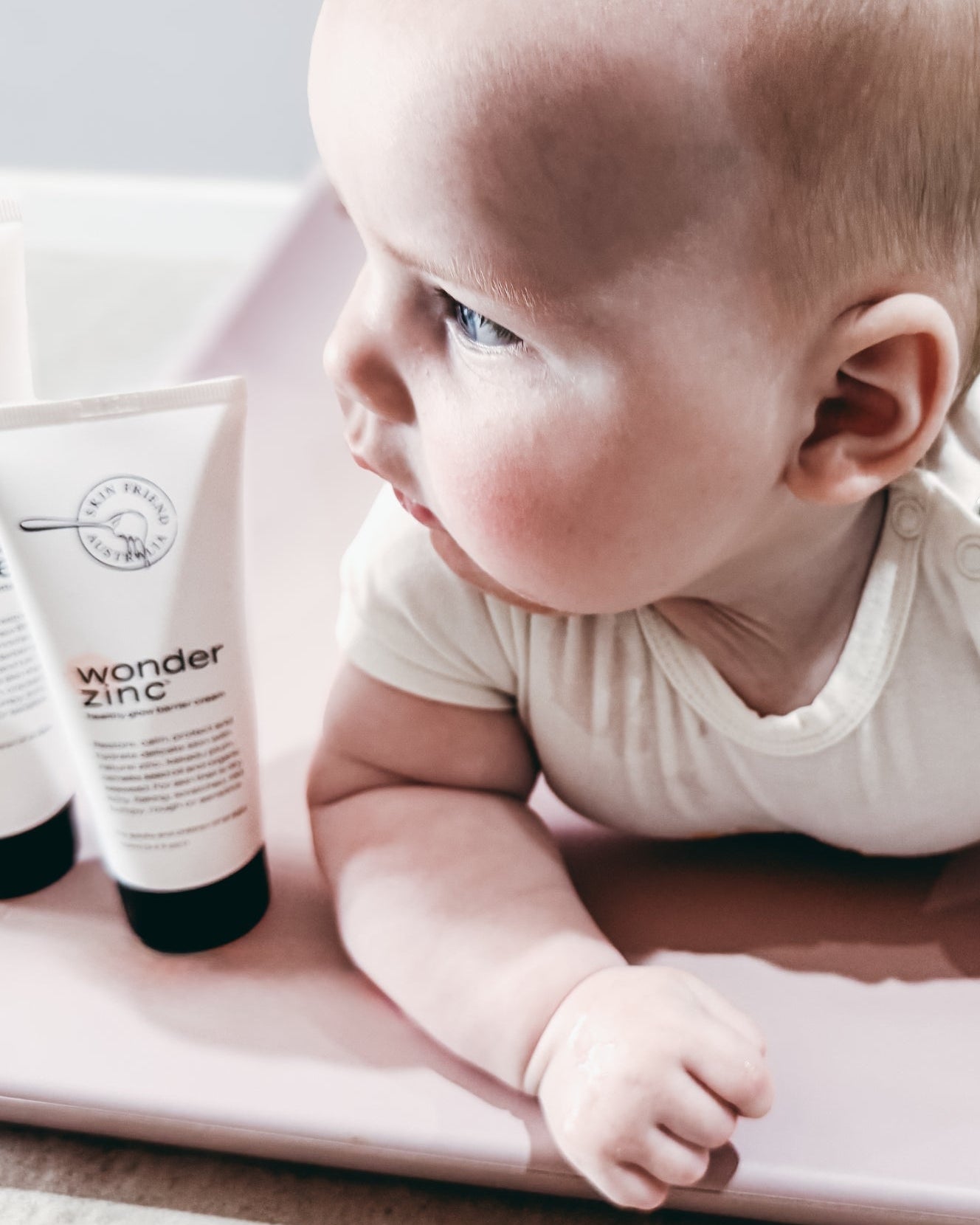
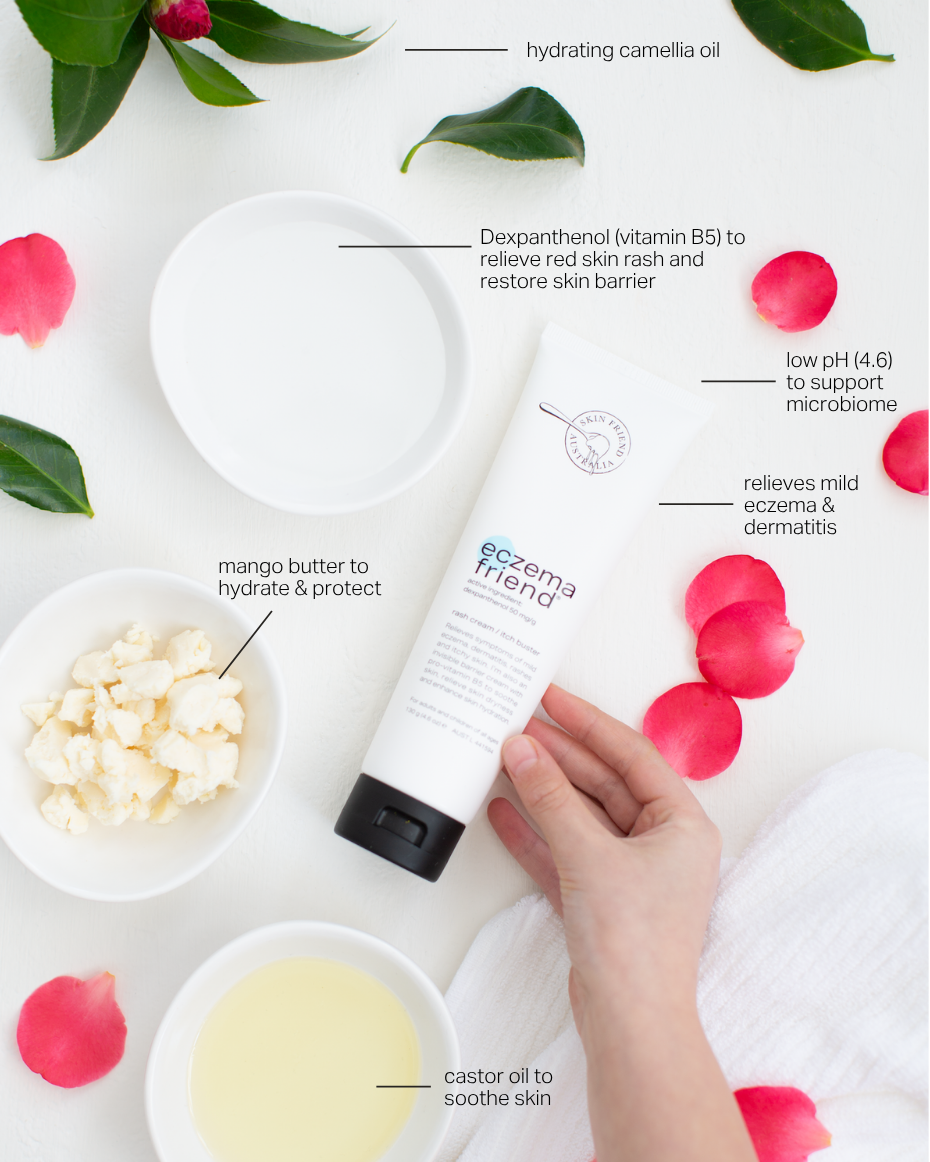
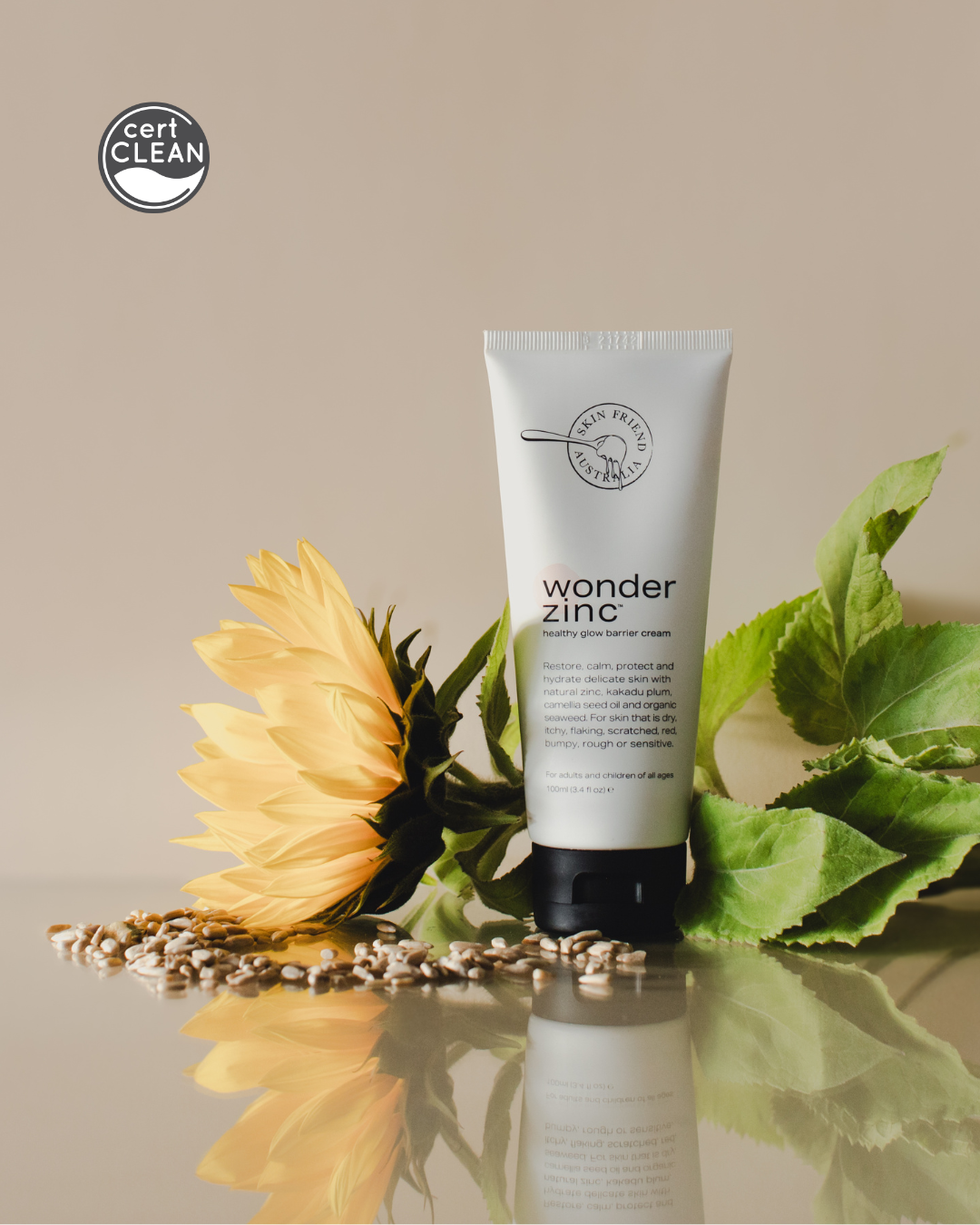
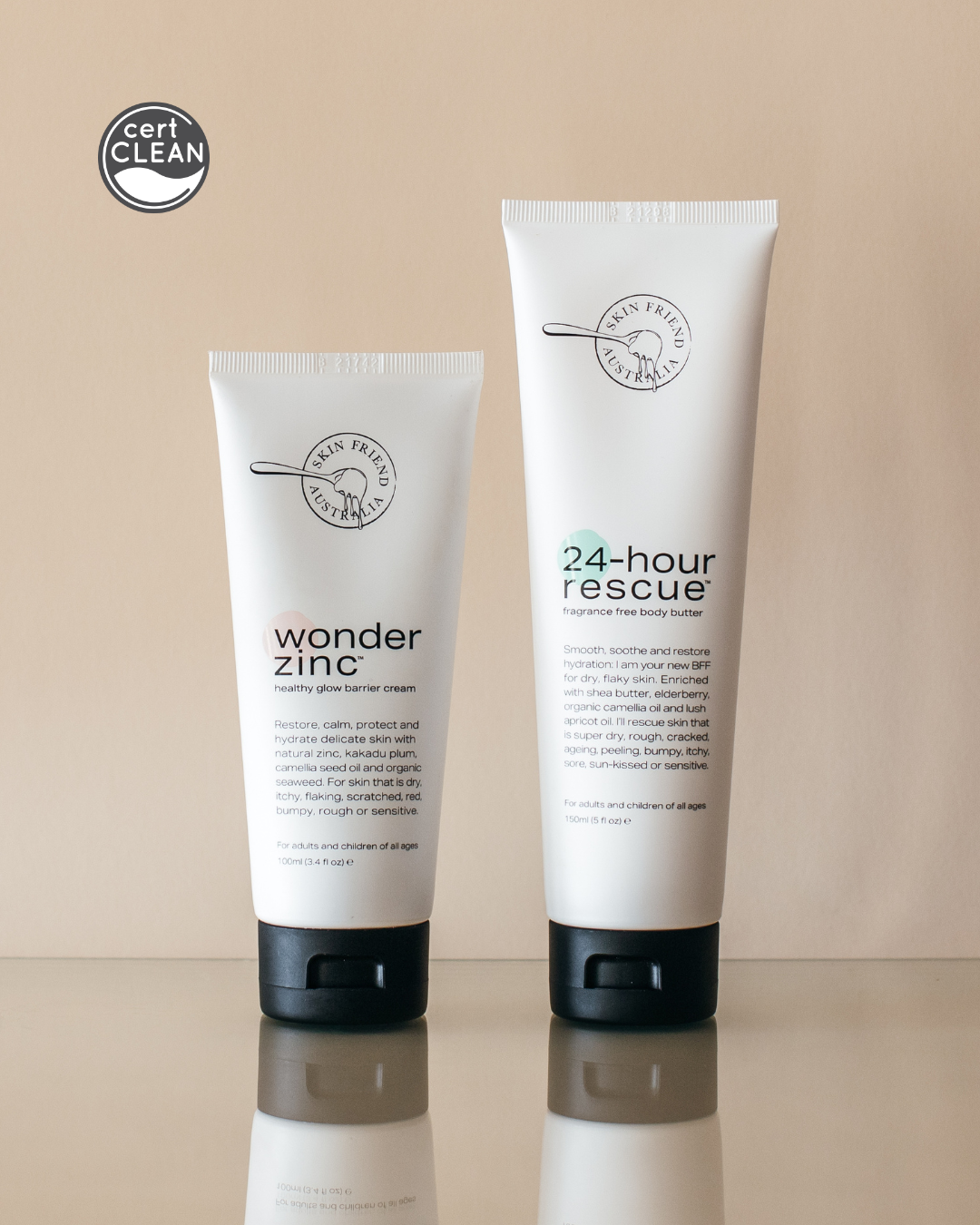
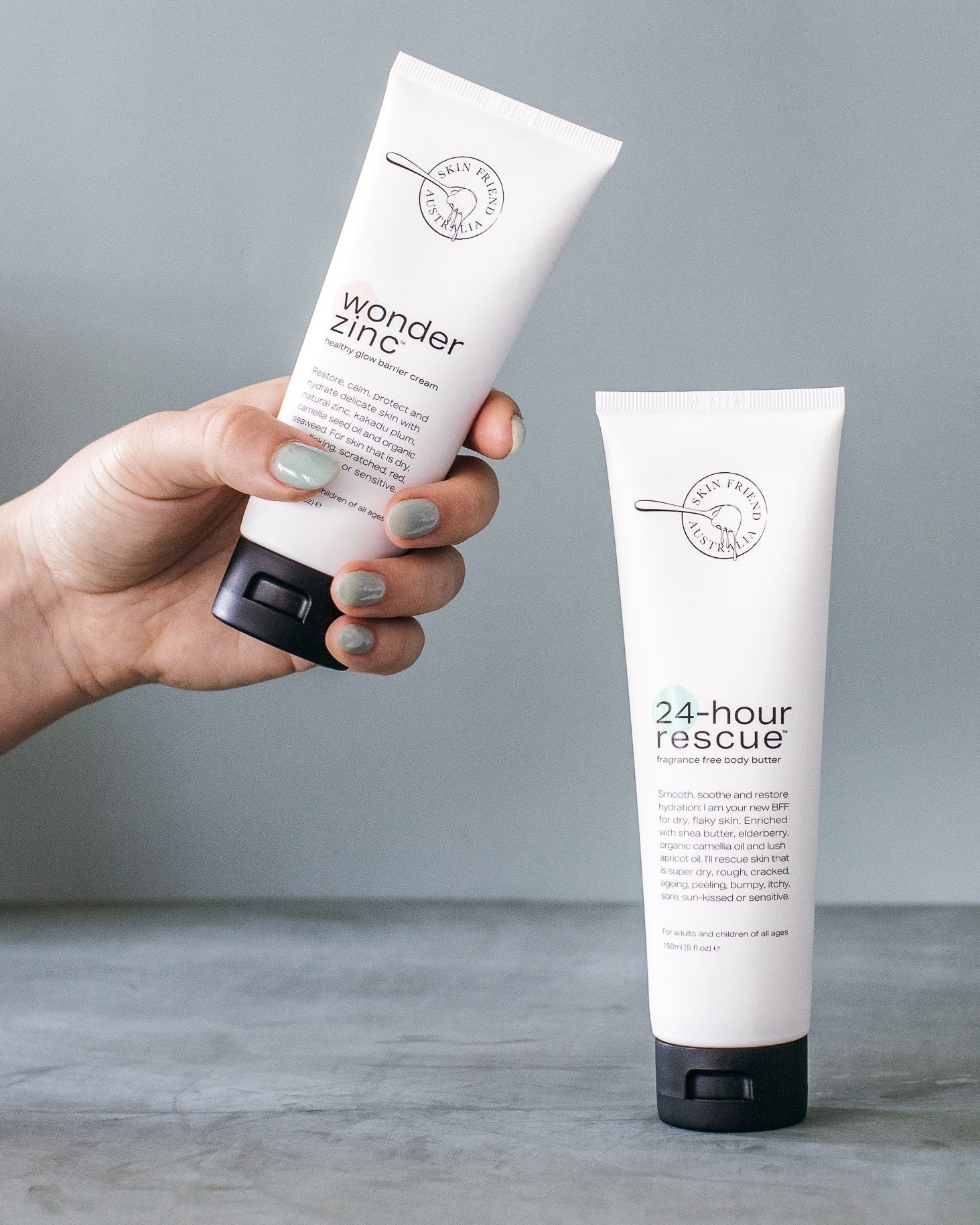
Absolutely! Our clean beauty eczema cream is specially designed for use on all areas of sensitive skin, including the face. Wonder Zinc is gentle enough for daily use on the face or body—even on delicate areas like around the mouth or under nappies. It is an excellent nappy rash cream but it can also be applied to skin on any part of the body. Eczema Friend contains natural mango seed butter, organic camellia seed oil, castor oil and more, plus provitamin B5 to relieve mild eczema and itchy skin, support skin hydration and soothe skin. It can also be applied to skin on any part of the body.
How often should I apply the baby skin rash treatment cream?
Apply our non-toxic baby eczema cream as needed, especially after bathing or when dryness or itching occurs. Consistent use helps maintain hydration, protect the skin barrier and prevent flare-ups. If your baby has nappy rash, apply Wonder Zinc twice daily in the nappy area to protect their skin from flares.
Does this cream help with other skin irritations?
Our eczema cream for toddlers also relieves mild dermatitis, nappy rash, red skin rashes and itchy skin. Pair it with our zinc oxide barrier repair cream for additional protection.
Is this non-toxic baby eczema cream vegan and cruelty-free?
Yes, our non-toxic eczema cream for toddlers products are 100% vegan and cruelty-free. We never test on animals and only use TGA-registered, plant-based ingredients, making our eczema cream suitable for families following a vegan lifestyle.
Can I use this natural eczema cream for babies under my child’s clothing or nappies?
Absolutely. The non-greasy formula of our natural eczema cream for kids ensures quick absorption and won’t stain clothing or leave residue on fabric. For nappy areas, apply Wonder Zinc as a protective barrier before putting on a fresh nappy to help shield delicate skin from moisture, friction and irritation. This means your child stays more comfortable between changes, with calmer skin that’s protected as they move, play and sleep—giving you peace of mind throughout the day and night.
Can parents use the same eczema cream as their child?
Absolutely. Adults with eczema also benefit from both our eczema rash cream, which delivers the same steroid-free, ceramide-repair approach at a concentration suited for mature skin. Wonder Zinc is also suitable for all skin types (including dry skin, normal, combination, flaky, ageing and sensitive skin) and all ages (including during pregnancy).